
Skip to content
Reconstrucción Familiar®Dr. Pedro Uriarte · Neuropsychologist
ES My file WhatsApp
Reconstrucción Familiar®F.A.M.I.L.I.A. Method · Dr. Pedro Uriarte Molina

May your family stop surviving and become a home again.

No one gets sick alone. No one heals alone.

A path of seven thresholds and five movements for families living through an addiction, a trauma, a loss, a diagnosis or years of silence. Here you'll find questionnaires to answer together, letters for when there are no words, guides for a crisis, and a hand that won't let go.

Dr. Pedro Uriarte Molina
Dr. Pedro Uriarte MolinaNeuropsychologist · Doctor in Mental Health
Tijuana · San Diego
A letter before we begin

Dear family,

This page is for you. For the family you have, the one you lost, and the one you're choosing to build.

“A family isn't rebuilt to go back to what it was. It's rebuilt to become the home it always should have been.”

— Dr. Pedro Uriarte Molina

I know how you got here.

Maybe it was at three in the morning, phone in hand, listening to every car that passed on the street. Maybe it was after a slammed door, a call from the hospital, news that split the story of your home in two. Maybe it was in silence, the kind of silence that's scarier than shouting, when everyone tiptoes around and no one dares to name what's happening.

For many years I watched the same mistake repeat itself in mental health. A person came into treatment, we worked with them for weeks or months, they got better… and then they went back to a home that hadn't changed. To the same silences, the same shouting, the same roles. And the wound waiting for them at home opened again.

That's why today I say it with all my clinical conviction: treating one person is no longer enough. A son's addiction reorganizes the whole life of his mother, his father, his sisters and brothers, his grandparents. A mother's depression changes the climate of the entire house. A grandfather's trauma can keep living, unnamed, in a granddaughter's fear. No wound happens to just one person, and no healing does either.

I've seen families walk into my office not speaking to each other, each one in a corner of the room, and months later hold each other in tears. I've seen mothers finally sleep through the night. Fathers who said “I love you” for the first time in their lives. Daughters who stopped being mothers to their siblings. Sons who stopped being “the problem in the house” and went back to being, simply, sons. Grandmothers who could finally say out loud the name of the one who was gone.

You won't find anyone to blame here. You'll find a path: seven letters, seven verbs, seven thresholds. Stop, Open, Look, Intervene, Set limits, Reconnect and Anchor. Questionnaires for each person to answer in their own notebook and then sit down together at the table. Letters to read out loud when you can't find the words. Guides for the first hours of a crisis. And a safe place to keep what you discover along the way.

I'm not speaking to you from above, but from beside you. I come from a family too. I also know what it is to love and get it wrong, to care and grow tired, to lose and start over.

As long as there's one person willing to stay, to talk, to ask for help, to try one more time, the family can be rebuilt. If today that person is you, it has already begun.

We are a family in reconstruction. And yours can be one too.
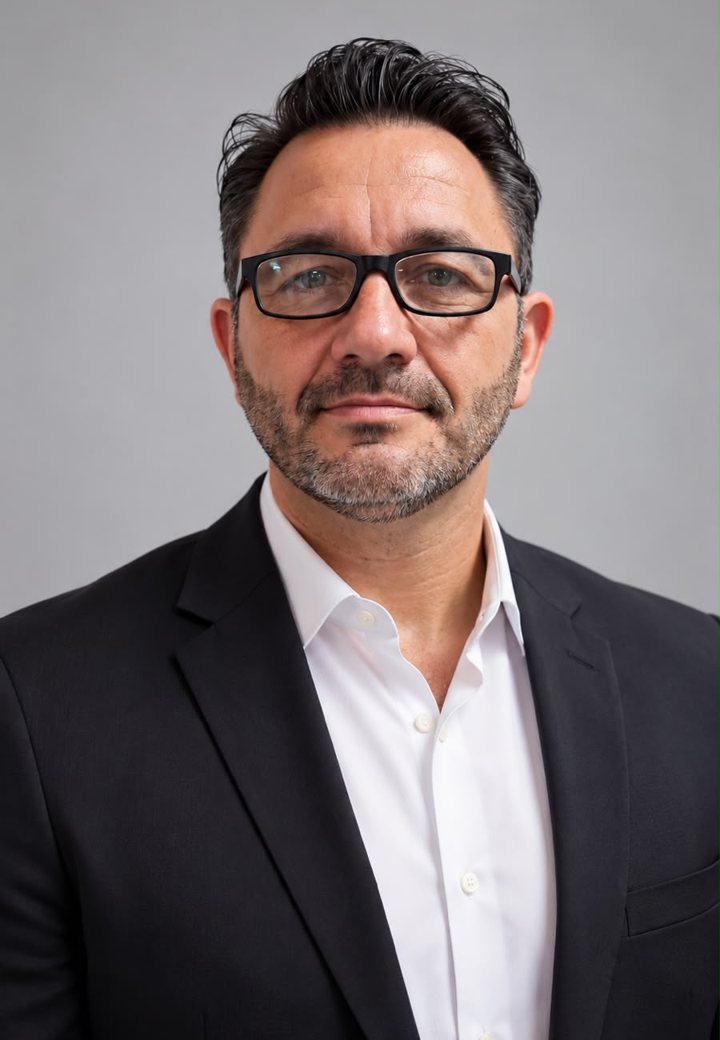
Dr. Pedro Uriarte MolinaTijuana, Baja California · San Diego, California
Who this house is dedicated to

To the families that broke without knowing they could be rebuilt.

Every line is a family I've walked alongside. Maybe yours is in one of them.

  • To the mother who waits up, phone in hand, listening to every car that passes on the street.
  • To the father who didn't know how to say “I love you” and said it by working until he broke.
  • To the daughter who became a mother to her siblings too soon. To the son who silently carried what no one at home dared to name.
  • To the grandmothers and grandfathers who, at the age for rest, started raising children again.
  • To the families the border split in two, who love each other over video calls, counting the years.
  • To those with an empty place at the table or a name that's no longer spoken.
  • To the families who tried everything and keep trying. To those who fight, hurt each other, drift apart, and still don't let go.
Everything a family needs, in one place

A house with many doors

7thresholds of the F.A.M.I.L.I.A. Method
5movements: from protecting to transcending
54questionnaires to answer as a family
22points to measure where you are today
40letters from eight collections
12high-impact techniques
30exercises for the first 30 days
24/7helplines in Mexico and the U.S.

Where do I start?

Choose the door that looks most like what your home is living through today. They all lead to the same path.

8

Not sure where to start? Answer 8 questions.

In two minutes, the page tells you which doors to open first: crisis, addiction, trauma, emotions, grief or living together.

Take the test

Stories of families in reconstruction

See all →
The litany of Reconstrucción Familiar®

Treating one person is no longer enough.

It's always said the same way: at conferences, in family circles and at the first family table. Every line starts the same; that repetition is its strength.

Discover the method

It's no longer enough to treat one person, if they go back to the same home.

It's no longer enough to rehabilitate a child while the family waits outside.

It's no longer enough to look for someone to blame.

It's no longer enough to say “we keep our dirty laundry at home,” if no one at home ever washes it.

It's no longer enough to love each other, if no one knows where to begin.

It's no longer enough to stay quiet so there's no more shouting.

Today we need to stop, open and look.

Today we need to intervene, set limits and reconnect.

Today we need to anchor what's new and turn the home into a legacy.

Love is the engine, but it is not the map.

Today's quote

Share on WhatsApp
A letter for today
Portrait of Dr. Pedro Uriarte Molina
Who walks with you

Dr. Pedro Uriarte Molina

Neuropsychologist and Doctor in Mental Health, with a binational practice between Tijuana and San Diego. Founder and President of CISAMA, and creator of Reconstrucción Integral® in its three levels: the self, the family and the social fabric.

His clinical principle is simple to say and demanding to live: first the disorder, then the addiction, and always the family.

Reconstrucción Integral® · Level 2 · The family

The F.A.M.I.L.I.A. Method

Seven letters, seven verbs, seven thresholds. An ordered path so the love that already exists in your home can finally find a way to flow.

Almost every family that comes to my office loves each other. So much love, and yet so much pain. A family can love each other deeply and still keep hurting each other, because no one taught them how to stop a crisis, how to talk about what hurts, how to look at their story or how to set limits without ceasing to love. The order isn't random: you can't break the silence in the middle of a storm, you can't reconnect what was never looked at, you can't leave a legacy without healing first.

Tap each letter to see its threshold.

The five movements

From protecting to transcending

Across five movements, the family crosses the seven thresholds, in 30 chapters. Each movement is a big shift in the way the family sees itself and cares for itself.

The foundations

The 12 principles of Reconstrucción Familiar®

#PrincipleThe phrase
The three levels

Reconstrucción Integral®

Human beings don't transform: they reconfigure. And what is reconfigured in one person is reconfigured in their family and in their community.

1 · The person

Reconstrucción del Ser®

S.E.R. Method · 9 thresholds · 5 movements

“It's not about going back to who you were. It's about becoming who you are meant to be.”

reconstrucciondelser.com ↗
2 · The family

Reconstrucción Familiar®

F.A.M.I.L.I.A. Method · 7 thresholds · 5 movements

“No one gets sick alone. No one heals alone.”

You are here.

A rebuilt person rebuilds their family. A rebuilt family rebuilds its community. And a rebuilt community no longer leaves anyone out.

The chain of family reconstruction
The four operations
1Restorewhat can still work again.
2Compensatefor what doesn't come back the same.
3Replacethe patterns that do harm.
4Consolidatewhat's new with rituals and time.
Family spirituality in three moments
4Believing again, togetherThere's something bigger than our crisis.
25The forgiveness that brings us homeWhat we let go of stops ruling us.
28Our family has a purposeWithout meaning, there's no reconstruction.
How a family in reconstruction talks

Say this, not that

Words reconfigure too. These are the ones we use at home, in therapy and in family circles.

Don't saySayWhy
Book · Reconstrucción Familiar®

The path: 30 chapters, five movements

The outline of the whole journey. Each chapter opens with a scene many families will recognize and closes with its questionnaire, its family table and a fridge quote.

Family questionnaire: start and finish

Where are we today?

To know how far a family has come, it first needs to know where it's starting from. Each member rates from 1 to 10 how they feel the family is doing on the 22 points of Reconstrucción Familiar. The page calculates the family average for you.

Who is rating?

Answers are saved only on this device.

My rating

Our family average

At the startToday

It's not about getting a ten on everything. It's about seeing the path. A point that went from 2 to 5 is a huge victory.

My starting questions

Before crossing the first door

The first family table

Sit down together, no screens. Each person shares, if they want to, just one answer. No one interrupts, no one corrects, no one judges. At the end, answer together:

Our promise

Write the promise, have everyone sign it, and put it somewhere visible in the house. It's the first document of your family's reconstruction.

“If you want to change the world, go home and love your family.”

— Quote attributed to Mother Teresa

Our questionnaire · one per chapter

The 30 questionnaires of Reconstrucción Familiar®

Twenty questions plus one for each person, in five stages: look, feel, understand, choose and close. Then, the family table and the fridge quote.

A notebook for each person

Answer here or on blank sheets, with the date. Later you'll answer again and see how much you've changed.

Girls and boys too

They can answer by drawing, with a trusted adult, only the questions that fit their age.

Seven days before moving on

A family doesn't change because of what it reads, but because of what it lives and repeats together. Live the practice before the next chapter.

Reconstrucción Familiar® Manual · Edition for families of patients in residential treatment

The family goes into the process too

For you, the one who stayed outside. Your loved one is in a safe place now. Now it's your turn to start healing.

Dear mother, dear father, dear family,

I know what admission day was like. Maybe it was the longest morning of your life. Maybe you arrived with a suitcase packed in a hurry, with swollen eyes, with a lump in your throat. And then the door closed, and you stayed outside, your heart split in two: one half relieved because they're finally safe, and the other wondering if you did the right thing.

You did the right thing.

Thank you for the sleepless nights, for the miles driven looking for them, for the calls you answered in fear, for every time you paid, forgave, believed again. Now I'll tell you the other truth, the one that changes everything: your loved one is in treatment, but the day they leave, they'll go back to a home. If that home is still the same, the wound that was waiting for them will open again. That's why the family goes in too. Not as the guilty party, but as the protagonist.

You didn't abandon them at the door: you brought them here to live.

Dr. Pedro Uriarte MolinaFirst the disorder, then the addiction, and always the family
27 truths for the family that stayed outside

What each chapter tells you

My questionnaire and my family's

24 questionnaires for the time in residential treatment

First on your own; then, if possible, at the family table. When your loved one leaves the clinic, you'll answer them again.

Practical guide A · Keep it by the phone

Against manipulation: if you hear… you answer…

The person you love is not their addiction. When the addiction speaks, it uses their voice, their tears and your love. These answers aren't cold: they're love with limits.

Validate the emotion. Don't grant the request. Don't decide on the call.

Practical guide B

Our family agreement

A family without agreements lives on shouting. A family with agreements lives on trust. Check it off together, sign it and review it with the treatment team before the return home.

Practical guide F

The red-flag traffic light

A red flag isn't a sentence: it's a warning. And a warning in time saves a process. It's not for watching over anyone: it's so no one in the house has to guess what to do.

“Relapse is not the end. It's information.”

Practical guide D · There's a chair waiting for you

Mutual-support groups for families

Go to at least three meetings before deciding. If you can, let each person have their own space: mother and father in theirs, teens in Alateen.

The «Cartas de la Reconstrucción Integral®» collection · 8 manuals · 800 letters

Letters for when there are no words

Each letter speaks to someone specific, at a specific moment. Read one a day, out loud if you can. Give them to someone when you can't find the words. Read them at the family table. Here are five from each collection, chosen for families.

The foundations of the letters

The twelve axioms on three levels

Every letter closes with one of these axioms: the same principle seen from the person, the home and the city.

#SelfFamilyCommunity
What you repeat becomes a way of life

Quotes for the fridge, the phone and the heart

Read them when the phone rings. Read them when you want to give up. Copy them, share them, put them up where the whole house can see them.

For every place in the home

Advice for everyone in the family

Each person carried something different. That's why each person needs something different: the mother who held everything together, the father who kept everything inside, the daughter who grew up too soon, the grandmother who is raising children all over again.

Free guides for families · free to use

Guides for the hardest moments

Written for families on the Tijuana–San Diego border. They work anywhere. They guide you, but they do not replace a professional evaluation.

Appendix C · F.A.M.I.L.I.A. Method

The twelve high-impact techniques

What a family lives and repeats together becomes part of who they are. These are the practices that turn the method into habit.

And to make it last

Four practices that turn a home into a legacy

The family tree

Plant something living that grows with you. Every anniversary, take a photo next to it.

Your three rituals

One daily, one weekly and one yearly. What a family repeats with love turns into home.

The family mission

One sentence that answers: why are we a family? Write it together and hang it on the wall.

The family declaration

“We lived through storms that almost tore us apart. We learned to stop, to protect each other and to never let go.”

The heart of Reconstrucción Familiar®

The family table

A set weekly gathering, with no screens, where the family talks by taking turns and without wounding each other. Whoever leads the table doesn't have to be right: their job is to make sure everyone speaks and no one gets hurt.

How a family sits down at the table

A set day and time

Choose the moment together. What has a date gets done; what's left “for whenever we can” never comes.

No screens

Phones go in another room, including the leader's. Attention is the first form of respect.

One person leads

It can be the mother, the father, a grandmother, an older daughter or a therapist. Their job is to give turns and stop the hurt.

Turns are respected

An object passes from hand to hand. Whoever holds it speaks; everyone else listens. No one interrupts, no one corrects, no one judges.

Children too

They can show a drawing or say one word. They are never asked to carry the adults' problems.

If voices rise, pause

Anyone can use the pause signal. Twenty minutes to calm down, and you come back to the table, not to the fight.

End with something good

Each person finishes with one sentence: “Today I felt ___ at home,” or something they're grateful for about someone at the table.

This week's question

The last ritual · The candle is lit again

Sit in a circle, with no screens. In the center, place the promise from your first family table, the safe home contract and your family's mission. Light the candle. One minute of silence. Then each person carefully takes the candle and says:

“That night I chose to stay. Today I choose to keep going.”

At the end, everyone holds a hand near the flame and says together: “We are a family in reconstruction. And ours already is one.” This time, don't blow out the candle right away. It is your family's light.

To watch as a family

Videos that open conversations

A story told well can say in ten minutes what a family hasn't been able to say to each other in years. Watch them together and, when they end, ask just one question: what moved you?

Coming soon: videos by Dr. Pedro Uriarte

Short videos on each threshold of the F.A.M.I.L.I.A. Method, testimonies from families in reconstruction and readings of the letters out loud. In the meantime, here are selected talks and searches to watch as a family.

Notify me on WhatsApp

Links open YouTube or TED in a new tab. Searches show results that change over time: adults should watch them first before sharing them with children.

Appendix A · Safety first. Reconstruction second.

Get help now

Asking for help is not betraying your family. It's saving it. If someone is in danger, leave this page and call.

911Emergencies · Mexico and the United States
800 911 2000Línea de la Vida · Mexico's national helpline · 24 hours
988Suicide & Crisis Lifeline · U.S. · also in Spanish
1 888 724 7240Access and Crisis Line · San Diego County
1 800 799 7233National Domestic Violence Hotline · U.S.
1 800 662 4357SAMHSA National Helpline · U.S.
1 800 422 4453Childhelp · child abuse · U.S.
664 583 0000Clínica Avance and Dr. Pedro Uriarte's practice · Tijuana

In any other country: your local emergency number or the nearest emergency room. International directory of crisis lines: findahelpline.com. Check these numbers every year, because they can change.

Get help today if someone in your family…

Someone talks about taking their own life, says goodbye or gives their things away.
Someone is hurting themselves.
There is hitting, threats, weapons, or someone fears for their life.
A child, a young person or an older adult is being abused, mistreated or neglected.
Someone used a dangerous amount, doesn't respond, is breathing very slowly or has blue lips.
Someone wants to suddenly quit alcohol or tranquilizers after long-term use: this requires medical supervision.
Someone hears or sees things others don't, or feels persecuted.
Someone in the family has gone missing.

While help is on the way

If the person is unconscious but breathing, lay them on their side so they don't choke. Keep any container, pill or substance to give to the medical staff. Stay with the person and speak in a calm voice. Don't scold them. If there is online blackmail or harassment: don't delete conversations and don't pay; report it to 911 or the Baja California State Attorney's Office (Fiscalía), and in San Diego also report it to NCMEC's CyberTipline (1 800 843 5678).

Our family safety plan

Fill it out when things are calm, when no one is in crisis. It is saved only on this device. Copy it and put it on the fridge.

Dr. Pedro Uriarte Molina
Neuropsychologist · Doctor in Mental Health

Dr. Pedro Uriarte Molina

Born in Tijuana, he practices binationally between Tijuana, Baja California, and San Diego, California. Specialist in addictions, psychotraumatology, psychoneuroendocrinoimmunology and neurodivergence. University professor at the undergraduate and graduate levels, with academic collaboration in twelve countries across the Americas and Europe.

Founder and President of CISAMA, the Interdisciplinary Council on Mental Health and Addictions (Consejo Interdisciplinario de Salud Mental y Adicciones), which brings together 943 members. Founder of Cerebros en Casa®. Creator of Reconstrucción Integral® and its three levels: the self, the family and the social fabric.

“I don't speak to you from above, but from beside you.”

Six professional licenses (cédulas)

Verifiable in Mexico's National Registry of Professionals (RENAPRO).

Doctorate in Mental Health14405826
Master's in Neuropsychological Assessment and Rehabilitation14405798
Bachelor's in Psychology11082917
Master's in Psychoanalytically Oriented PsychotherapyRENAPRO
Master's in Senior Corporate ManagementRENAPRO
Law DegreeRENAPRO

Registered methodologies

®Reconstrucción Integral®The core philosophy: self, family, social fabric.
®Reconstrucción del Ser® · UERS®S.E.R. Method · 9 thresholds.
®Reconstrucción Familiar®F.A.M.I.L.I.A. Method · 7 thresholds.
®NeuroInmersión® · Speaker NeuroInmersivo®Immersive intervention tools.
®Tanatología de las Adicciones®All the losses addiction leaves behind.
®Psicotraumatología de las Adicciones®The trauma behind substance use.

Certifications and teaching

13 CONOCER competency certifications, including EC0548 Addiction Counseling (CONADIC) and EC0938 Victim Care. Registered external trainer with the STPS. Speaker, workshop leader and business consultant.

Academic collaboration

Uruguay, Paraguay, Colombia, Peru, Costa Rica, Argentina, Spain, the United States, Canada, Guatemala, Honduras and El Salvador.

Office

Calle Querétaro #2284, Colonia Madero (Cacho), Tijuana, B.C., C.P. 22040
WhatsApp and phone: +52 664 583 0000
pedrouriarteconsultor@gmail.com

Treatment for addiction and mental health

Clinics and programs

In our clinics, the family comes in from day one, not when the person is about to leave. First the disorder is stabilized, then the addiction is treated, but the family doesn't wait its turn: it walks alongside from the very first afternoon.

Residential treatment

Clínica Avance

Treatment for addiction and mental health, for women and men. With its own manual for families: “The family also enters the process.”

664 583 0000

Request information
Residential treatment

Clínica Integral Metamorfosis · Men

Specialists in addictions and mental disorders. A comprehensive program with family work from admission.

663 165 6552

Request information
Residential treatment

Clínica Integral Metamorfosis · Women

A space for women, with the Manual for the Reconstruction of Women and support for their families.

663 165 6552

Request information
Outpatient

Comprehensive Outpatient Treatment Program

3months of treatmentOne session a week: twelve in total.
360°NeuroInmersión 360°Immersive experiences in the service of therapy.
tDCSTranscranial stimulationWhen the evaluation calls for it.
1personalized manualMade for each patient's story.
1/momonthly family therapyBecause no one heals alone.
Clinical criteria

Why residential treatment takes months

Residential treatment requires a minimum of six months to show results, and it can run from nine months to a year or a year and a half depending on severity. The order follows the triad: disorder, addiction and codependency. A few days of detox don't rebuild a life: they stabilize the body. Rebuilding the self and the family takes time, order and repetition.

First the disorder, then the addiction, and always the family.

Guided family evaluation and intervention

Neuropsychological evaluation

For teens and adults: addiction, mental health and neurodivergence (ADHD, autism). Bring your notes: what you saw, since when, what changed in sleep, eating, school and friendships.

The conversation that saves lives

We prepare the family team, write the letters, choose the moment and guide the conversation to invite your loved one into treatment, with no ambushes.

Reconstrucción Familiar® in session

The F.A.M.I.L.I.A. Method lived with a therapist who leads the table, in Tijuana, in San Diego or online.

Reconstrucción Integral®

The work and its websites

Books, manuals, guides and letters for the person, the family and the community.

The family books and manuals

Book · 284 pages

Reconstrucción Familiar®

Seven thresholds and five movements so your family can stop surviving and become a home again. Four doors, 30 chapters, an entry and exit questionnaire, twelve techniques and appendices for professionals and family circles.

Manual · Clínica Avance

The family also enters the process

For the families of women and men in residential treatment: codependency, the manipulation of addiction, family wounds and trauma, mental and neurodevelopmental disorders, and a new life.

The «Cartas de la Reconstrucción Integral®» collection · 8 manuals, 800 letters

Free guides for families

Frequently asked questions

What families ask

Eight questions · two minutes

What does my family need?

Answer based on how things are at home today. At the end, the page tells you which doors to open first. It's not a diagnosis: it's a compass.

Chapter 15 · The ones who left and we never mourned

Grieving as a family

What isn't cried gets carried. What is cried together heals. This door is for the family that lost someone, or lost something no one lets them grieve.

To the family with an empty chair at the table:

There are homes where a name stopped being spoken. No one forbade it; it's just that every time someone said it, someone else got up from the table. And so, without meaning to, the family stopped crying together and started crying in secret: the mother in the shower, the father in the car, the kids with their headphones on.

Grief that isn't cried doesn't go away. It becomes a symptom in the home: anger that explodes over anything, long silences, substance use that starts, a sadness no one names. Every unmourned family grief becomes a symptom in the home.

I'm not asking you to forget. I'm asking you to give yourselves permission to cry together, to say their name, to tell their stories, including the ones that make you laugh. Crying together is also rebuilding.

Dr. Pedro Uriarte MolinaTanatología de las Adicciones®

The losses that also count

The dates that hurt

The first-year calendar

The body knows before the mind does. Plan ahead for these dates and decide together how you want to live them.

For mothers and fathers

How to talk about death with a child

If the pain becomes danger. If someone in the family talks about not wanting to live or about “going to be with” the person who died, don't leave them alone and call today: 911 · Línea de la Vida (Mexico) 800 911 2000 · U.S. 988.
Manual 5 · Letters to Grief

Letters for the grieving family

“I'm not asking you to forget her: I'm asking you to live.”

We are a family in reconstruction

Stories of families in reconstruction

No family walks alone. These stories show what a threshold looks like when it's finally crossed.

Composite stories. Each one brings together the experiences of many families, with names, places and details changed to protect their identity. They do not correspond to any real person.

Does your family want to tell its story?

If your family has already crossed a threshold and wants its story to walk alongside others, write to us. It is shared only with your permission, changing every detail that could identify you.

Share our story
Circles, workshops, appointments and talks

Calendar

Spaces to live Reconstrucción Familiar® with support. Ask about upcoming dates on WhatsApp.

Appendix D · Guide for professionals and family circles

For professionals and communities

Therapists, counselors, clinics, schools and faith communities can use the F.A.M.I.L.I.A. Method to walk alongside families. Here's how to do it with care.

For mental health professionals

Assess safety first

If there is active violence, abuse or suicide risk, protection comes first. Joint sessions with the person causing harm are not recommended while any risk remains.

Stabilize before going deeper

First the disorder, then the addiction, and always the family.

Respect each member's pace

No one should be forced to talk, to reveal a trauma or to forgive.

Measure the process

Use the entry and exit questionnaires (22 items) to measure the process, without replacing clinical assessment.

Bring the family in from day one

The family enters the treatment of the person who got sick from admission, not when they're about to leave.

For family circles

A circle brings together three to six families, once a month, to support each other on this path. It can meet in a home, a school, a faith community or a clinic.

The circle's rules

  1. What is said in the circle stays in the circle.
  2. Each person speaks about their own experience, not someone else's.
  3. No one interrupts, no one corrects, no one gives advice that wasn't asked for.
  4. Children take part only in age-appropriate activities.
  5. If someone is at risk, they are guided to seek professional help right away.

A ninety-minute gathering

MomentLengthWhat happens
Welcome10 minA candle is lit and the circle's rules are read.
Check-in25 minEach family shares how the month's practice went.
Topic20 minPart of the month's chapter is read out loud.
Practice25 minEveryone lives one of the twelve techniques together.
Closing10 minEach family shares one thing they're grateful for, and a fridge quote is read.

A circle can go through the method in one year: one movement every two or three months, with a special gathering to close each movement and a final celebration where each family reads its family declaration.

Appendix E

Sources and foundations

The method brings together the author's clinical experience with contributions from family therapy, psychology, neuroscience, psychiatry and spiritual traditions.

Training and certification

Training for therapists, counselors and clinic teams in the F.A.M.I.L.I.A. Method, the questionnaires and family circles. For institutions, schools and faith communities.

Everything you've answered, in one place

My family file

Your answers live only on this device. From here you can see your progress, copy everything for your therapist and save a backup.

Progress by questionnaire

Take it to your session

Copy everything and paste it into an email or WhatsApp for your therapist. Nothing is sent automatically.

Let the doctor know

Backup

Copy the backup and save it in a note. To restore it on another device, paste it here and press “Load backup.”

Privacy notice

Your questionnaire answers are saved only in your browser and are never sent to us. Any information you share by WhatsApp, email or phone is used only to respond to you and provide care. This site is for education and support: it does not replace professional evaluation, diagnosis or treatment, and it is not an emergency service.

In crisis? Mexico: 911 · Línea de la Vida 800 911 2000 · U.S.: 988. You are not alone.
664 583 0000